
Best Portable Power Stations for Camping (2026): Sized for Real Trips
Outage planning asks a station one question: how long can you run the house? Camping asks two different ones—how far can you carry it, and what recharges it when there’s no wall socket to bail you out? The watt-hour math is identical; the constraints flip. Suddenly every gram is negotiated, the sun is your only utility, and the biggest load isn’t the fridge you’re protecting from an outage but the fridge you brought on purpose, full of cold beer. Here’s how to size a camping station around what you actually run in the field. This is the guide.
- No fridge, no laptop? A 300–500 Wh pocket station covers a weekend of phones, cameras, lights, and a drone battery or two—and fits in a daypack.
- Bringing a 45 L compressor fridge? That decision is your sizing decision: budget ~1 kWh + a 200 W folding panel for a 2-night stand.
- Car camping, not backpacking? Weight stops mattering at the trunk—take the same station you’d buy for home outages; it’s the same machine doing the same job.
- The killer combo: a station with a 12 V car socket, because most compressor fridges run native DC—no inverter, no conversion loss, ~30% more runtime from the same battery.
- Drive days are charging days. A 100–150 W car-input station refills meaningfully between trailheads. Solar is for basecamp, the alternator is for transit.
Where a Weekend Actually Goes
Run the honest energy budget for a warm-climate, two-night weekend and one item towers over everything else:
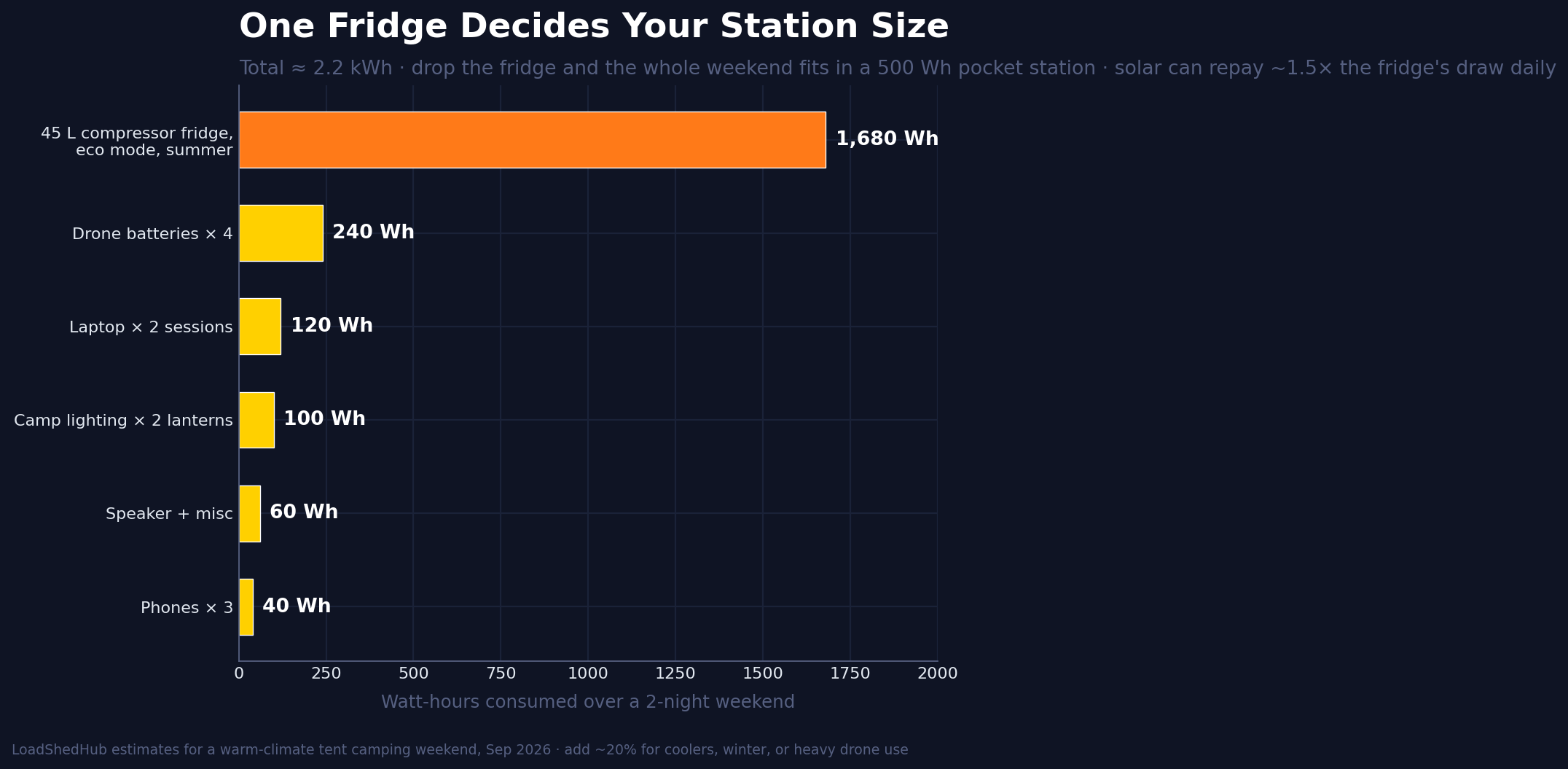
This is why camping advice that starts with brand names fails: the compressor fridge decision happens before the station decision. A 45 L fridge on eco mode in summer heat averages ~35 W around the clock—1.7 kWh over two nights, all by itself. Meanwhile phones, lights, cameras, and a laptop together barely clear 300 Wh. Size the fridge first, then let the runtime calculator price every other device you’re packing.
The Three Sizing Tiers
Tier 1 — The pocket weekender (300–500 Wh). No fridge. Phones, headlamps, a camera, drone batteries, maybe a laptop top-up. A 288–300 Wh unit does this weekend twice; USB-C PD 100 W keeps the laptop honest. This is also the class that makes sense in a backpack.
Tier 2 — The basecamp kilowatt (~1 kWh + 200 W panel). The fridge tier. The station runs everything for ~a day and a half; the panel repays roughly a full fridge-day per sunny day, making the weekend effectively indefinite. Solar reality check: a “200 W” folder delivers ~1–1.5 kWh over a good full day of moving it with the sun—the solar generator guide covers tilt, placement, and cloud math.
Tier 3 — The expedition (2 kWh+, vehicle-assisted). Overlanding, group camps, Starlink-and-espresso setups. This is home-outage hardware wearing mud tires; the buying logic is identical to the home station guide, plus expansion batteries that chain in the trunk.
Buying Checklist (Two Minutes)
- Capacity class first, brand second. The tier you picked above eliminates 90% of the market on its own.
- 12 V car socket = fridge port. Running a DC fridge natively skips the inverter entirely—it’s the single biggest efficiency win in the field.
- USB-C PD 100 W for laptops and fast phone top-ups without lumpy adapters.
- Solar input rating matters as much as capacity. A 1 kWh station that only accepts 100 W of panel recharges too slowly to matter at basecamp; 400 W+ input classes refill in an afternoon.
- Car charging input (100–150 W) turns transit into charge. Check it’s included, not an accessory.
- Weight honesty: ~9–10 kg for a 1 kWh-class LiFePO4 is normal. If the listing hides weight, it’s hiding it.
- IP rating and dust covers for ports—campsites are abrasive environments, even when the rain stays away.
The Picks (2026)
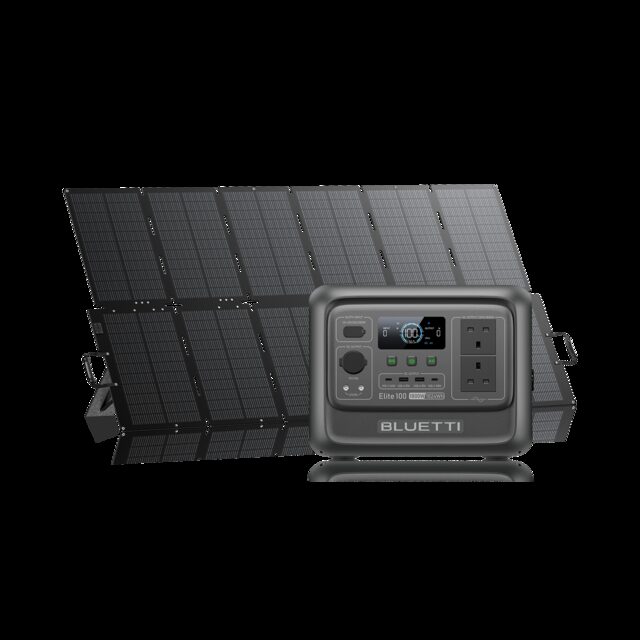
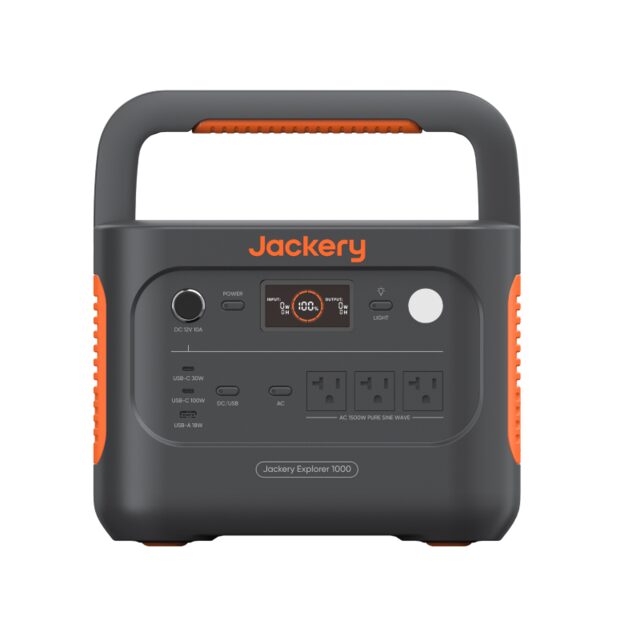
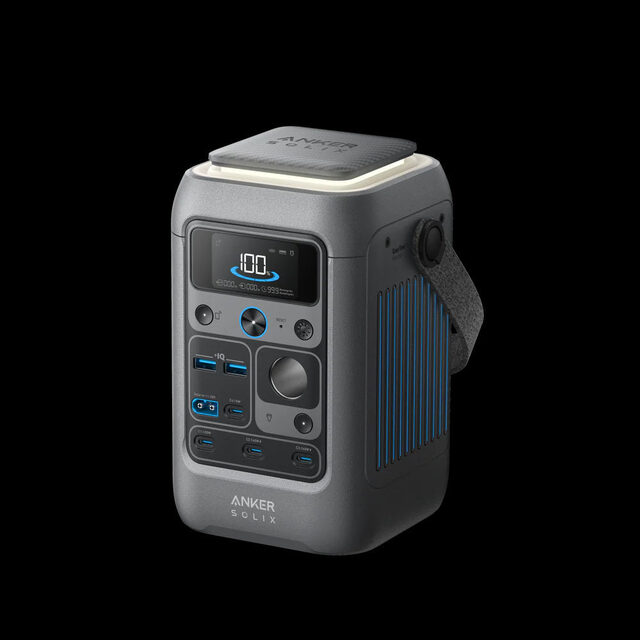
Prices move; capacity classes don’t. EcoFlow’s River 3 Plus covers the same Tier-1 job with a <10 ms UPS party trick—see the full station guide for the complete ladder from pocket to whole-house.
The Kit Patterns
- Day trip: C300-class station, charged at home, rides in the door pocket. Done.
- Weekend, no fridge: 500 Wh class OR the 288 Wh pick plus a 60–100 W panel for margin.
- Weekend + fridge: 1 kWh + 200 W folding panel + DC car socket cable. Pre-cool the fridge at home on mains so the battery only has to hold cold, not build it.
- Expedition / overlanding: 2 kWh class or expandable pair, 400 W of panel, and the vehicle’s alternator as the rainy-day charger. At this scale, compare against a small inverter generator honestly—noise rules decide it more often than math does.
The Bottom Line
Camping doesn’t need a bigger battery than an outage—it needs a more honest one, because there’s no grid coming to hide your sizing mistakes. Count the fridge, respect the sun, favor DC everywhere, and a weekend in the field runs on hardware you’d want at home during a blackout anyway. That dual citizenship is the whole thesis of this site—the same watt-hours, spent outdoors.
Next: best portable power stations | EcoFlow vs Jackery vs BLUETTI | best solar generators | runtime calculator