
Best Portable Power Stations (2026): Picks for Every Budget
A portable power station is the single most useful piece of outage gear most people can own: silent, safe to run indoors, zero fuel, and one purchase covers storms, PSPS shutoffs, camping trips, and the next Texas-style grid failure. But the category has exploded—dozens of brands, capacities from 250 Wh to 5 kWh, and prices from $150 to $5,000+—and the marketing is loud on every side.
- First station, under $250: Anker SOLIX C300
- Best value full kilowatt-hour: BLUETTI Elite 100 V2 (~$399)
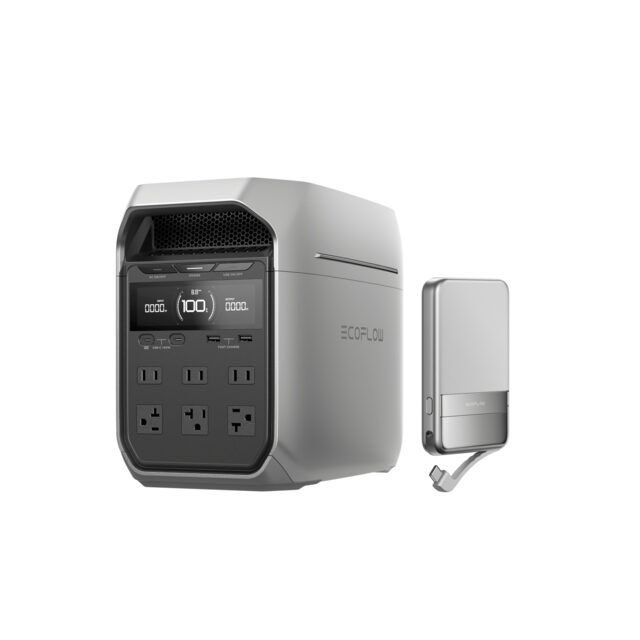
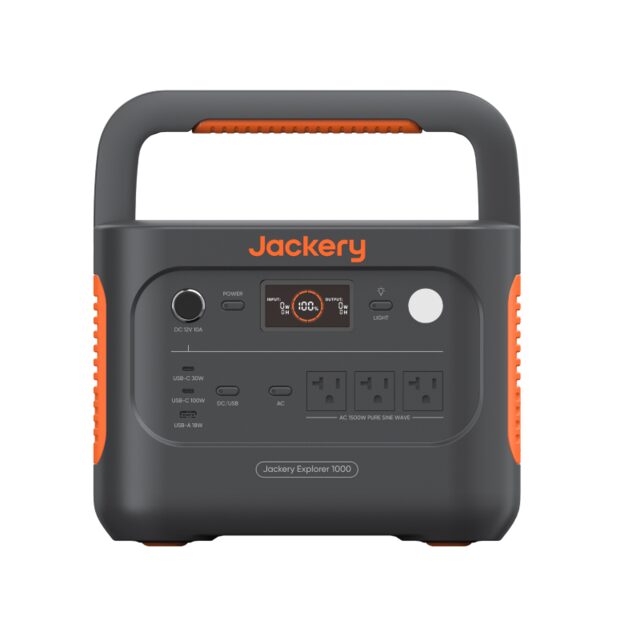
- Best for most families: EcoFlow Delta 3 Plus — or the Jackery Explorer 1000 v2 if it’s on sale that week
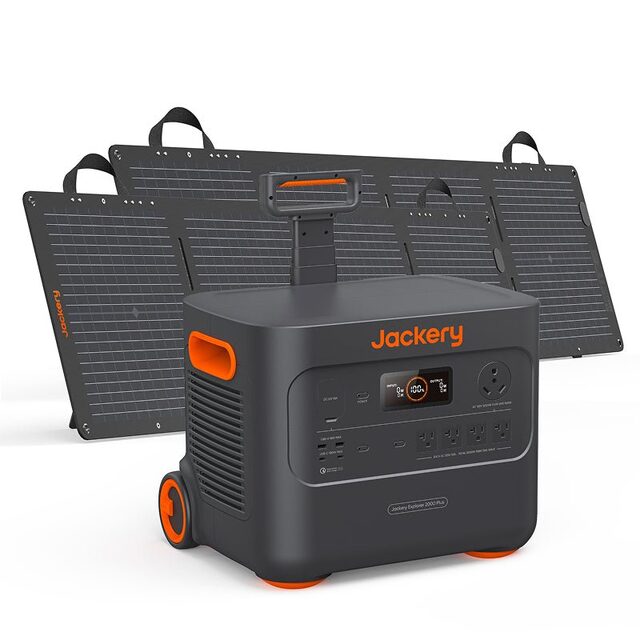
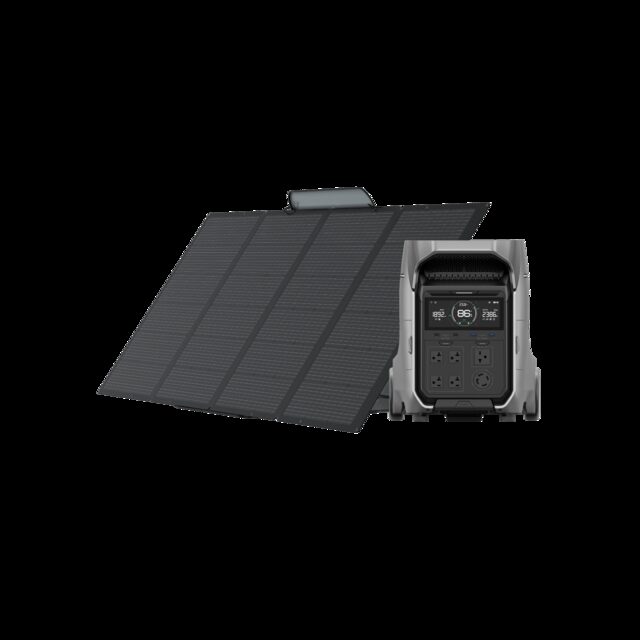
- Hurricane / week-long outage country: Jackery Explorer 2000 Plus, or the DELTA Pro 3 at whole-home scale
- Frequent short blips & PSPS country: EcoFlow River 3 Plus as an always-on UPS
- Not sure what size? 30 seconds in our runtime calculator settles it
How we picked: this guide is built on spec-sheet analysis, aggregated third-party testing (Wirecutter, OutdoorGearLab, CNET, and owner reports), and price-history data—no brand sponsors this site, and we’d tell you. Our angle is specific: which station actually gets you through an outage, which changes the rankings versus general “best power station” lists.
First: How Much Station Do You Actually Need?
Skip this math and you’ll either overspend or end up dark. Three numbers matter:
- Watts (W) = how much power a device draws right now. A fridge spikes 800–1,200W when the compressor kicks in, then settles to 100–200W. Your station’s continuous output must cover the spike.
- Watt-hours (Wh) = total energy in the tank. This is your runtime.
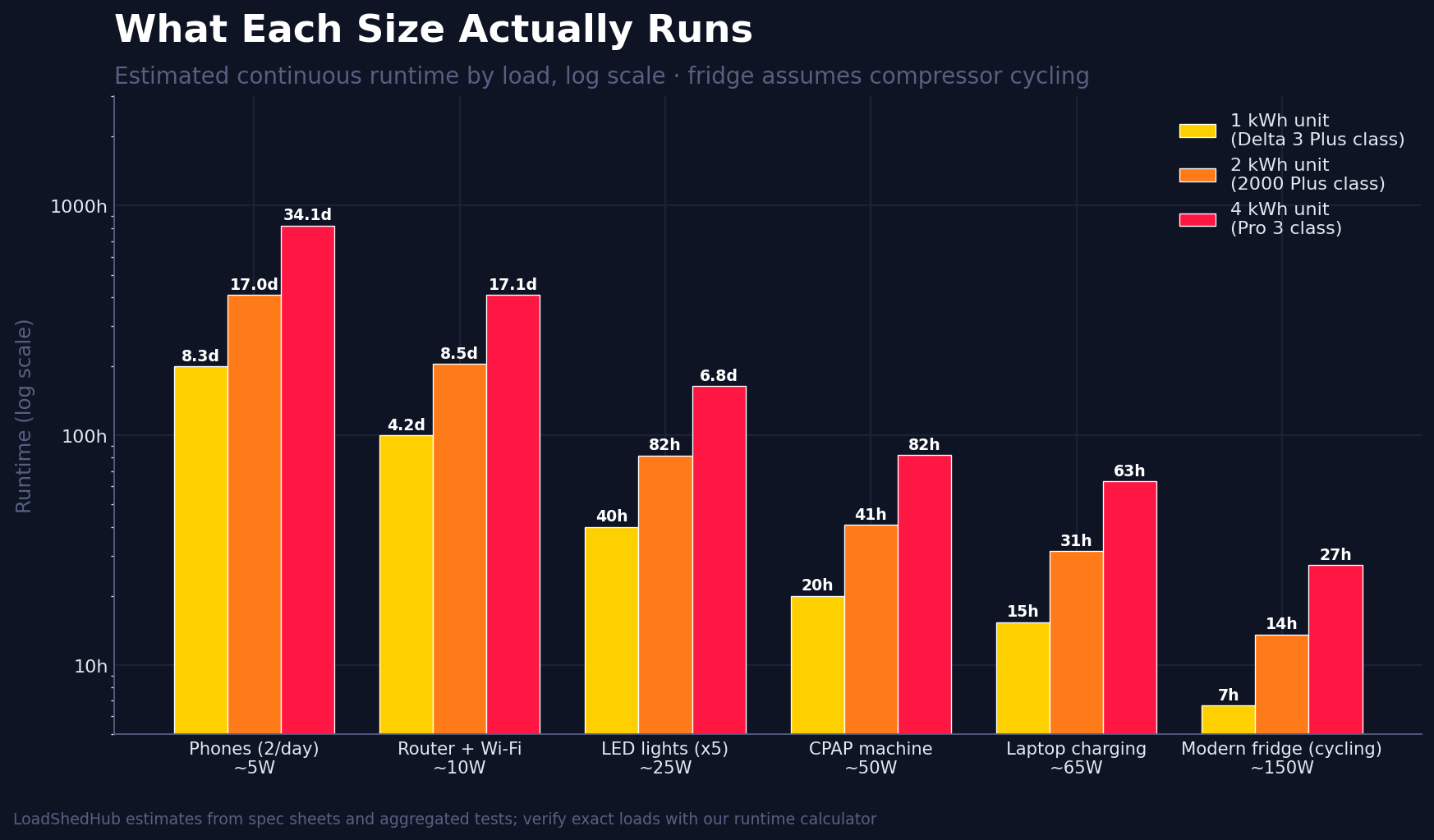
- Real-world rule of thumb: a modern full-size refrigerator runs about 7 hours per 1,000 Wh (compressor cycling, not constant draw). Double that for an efficient mini-fridge.
So: phones + Wi-Fi + lights for a day fits in 300 Wh. The fridge too, overnight, wants 1,000+. Fridge + freezer + medical gear through a 24-hour outage wants 2,000+. A whole storm event with solar recharging wants 3,000+.
The Second Thing: Insist on LiFePO4
Older stations (and some current cheap ones) use NMC lithium cells: more energy-dense, but rated for 500–1,000 charge cycles before meaningful degradation. Modern stations use LiFePO4 (LFP): slightly heavier, but rated for 3,000–6,500+ cycles—a daily-cycled unit lasting 8–15 years. For something you buy once and keep for storms, that’s the difference between a 3-year gadget and a decade of infrastructure. Every pick below is LFP.
The Picks, by Budget
Regional buttons open the official brand store or a major marketplace for your country — local currency, local stock, local warranty. Prices shown are typical 2026 US street prices; they move weekly. When our affiliate links go live, they’ll cost you nothing extra and help keep this site independent.
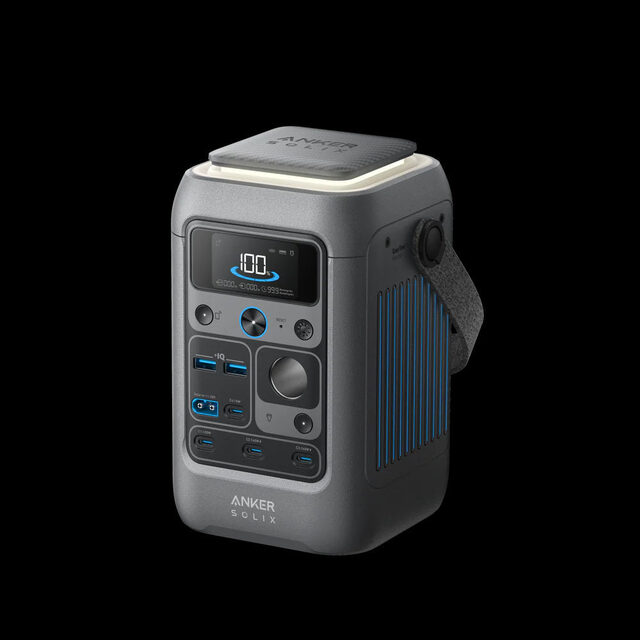
~$250: Anker SOLIX C300 — the “first one” pick
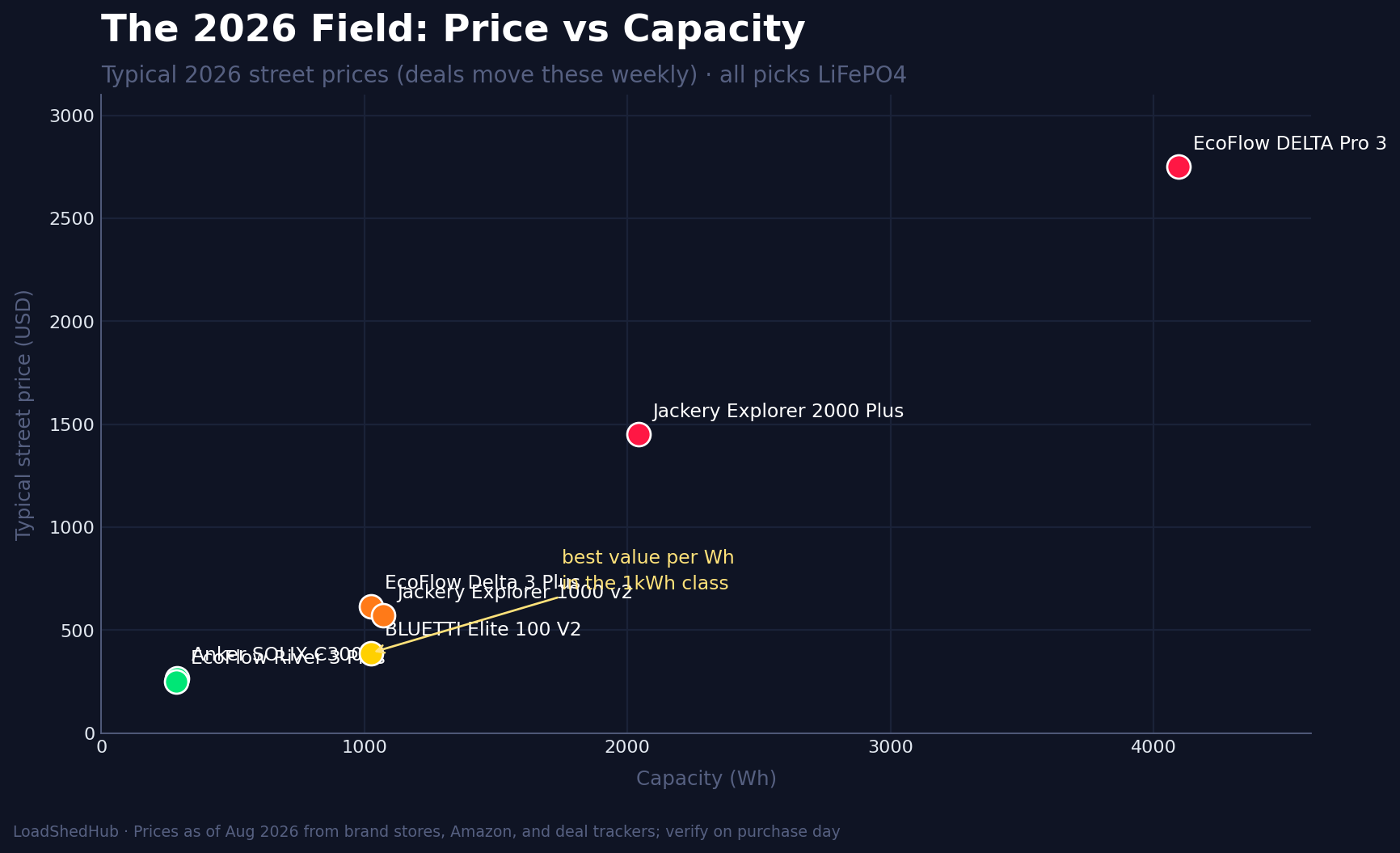
~288 Wh, 300W output, ~9 lbs, street price ~$220–$310
What it’s for: phones, tablets, laptops, router, LED lights, a fan, a CPAP for a night. This is the “keep the family connected and informed” tier—and it does that job for the price of a nice dinner out. Three AC outlets, USB-C, and light enough to live in a closet until needed. Skip it if you want to run any refrigeration or a microwave.
~$400–500: EcoFlow River 3 Plus or BLUETTI Elite 100 V2 — the apartment pick
River 3 Plus: 286 Wh expandable to 858 Wh, 600W (1,200W X-Boost), <10ms UPS pass-through, ~$200–$300
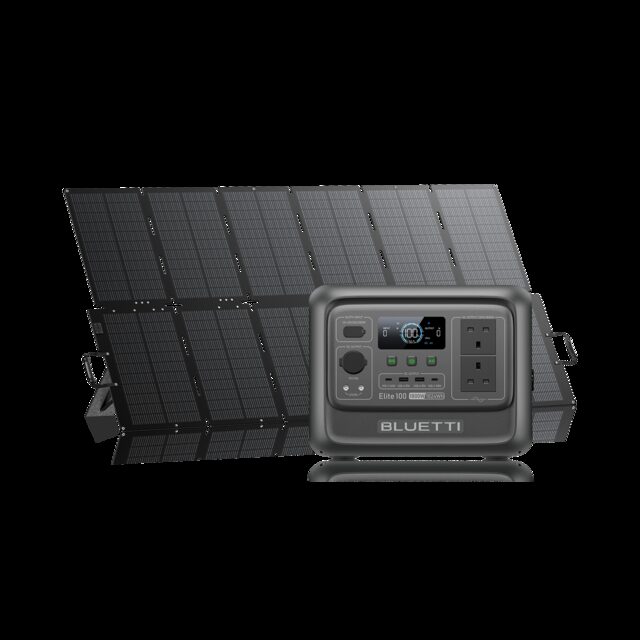
BLUETTI Elite 100 V2: 1,024 Wh, 1,800W, ~$379–$399
Two different philosophies. The River 3 Plus is small but doubles as a true UPS: plug your router/modem into it full-time, and when the grid blips, your Wi-Fi never even notices—the <10ms switchover is faster than any computer cares about. For PSPS country and brief outages, that’s magic. The Elite 100 V2 is the opposite trade: a full kilowatt-hour at a price that undercuts everything in its class—enough for a fridge overnight plus all your devices, at 1,800W output. Apartment dwellers: pick based on whether your outages are frequent-and-short (River) or rare-but-long (BLUETTI).
~$500–700: EcoFlow Delta 3 Plus or Jackery Explorer 1000 v2 — the sweet spot
Delta 3 Plus: 1,024 Wh, 1,800W, 0–100% in ~56 min, ~$580–$650 street
Explorer 1000 v2: 1,070 Wh, 1,500W, lightest in class, ~$449–$699 street
This is the tier most families should buy. One kilowatt-hour runs the fridge ~7 hours, or the router + phones + lights for days, or a CPAP for two nights. Both units are LFP, both recharge fast (the EcoFlow’s ~56-minute full charge is the fastest in class), both have strong app ecosystems. The EcoFlow wins on raw output and charging speed; the Jackery wins on weight and (frequently) street price—sales have dipped it to $449. Either is a five-star buy; check both prices the day you order.
~$1,200–2,000: Jackery Explorer 2000 Plus or EcoFlow DELTA Pro 3 — the whole-outage tier
Explorer 2000 Plus: 2,042 Wh (expandable to 24 kWh), 3,000W, street ~$1,200–$1,700
DELTA Pro 3: 4,096 Wh (expandable to 48 kWh), 4,000W (6,000W X-Boost), street ~$2,700
For hurricane zones, week-long winter outages, or anywhere the food in two freezers matters, this tier ends the anxiety. The 2000 Plus covers fridge + freezer + network + medical for ~24–36 hours, and accepts solar to extend indefinitely. The Pro 3 doubles everything—4 kWh runs an efficient fridge for days—and its 240V output can run well pumps and HVAC starters. Both are expandable later with battery packs, so you can buy the core now and grow. Skip this tier if your outages are consistently under 12 hours—the $600 tier does that job for a third of the price.
| Model | Capacity | Output | Standout | US street |
|---|---|---|---|---|
| Anker SOLIX C300 | 288 Wh | 300 W | Lightest pick; the first-station tier | ~$220–310 |
| EcoFlow River 3 Plus | 286–858 Wh | 600 W (1,200 W X-Boost) | <10 ms UPS pass-through | ~$200–300 |
| BLUETTI Elite 100 V2 | 1,024 Wh | 1,800 W | Most Wh per dollar | ~$379–399 |
| EcoFlow Delta 3 Plus | 1,024 Wh | 1,800 W | 0–100% in 56 minutes | ~$580–650 |
| Jackery Explorer 1000 v2 | 1,070 Wh | 1,500 W | Lightest in the 1 kWh class | ~$449–699 |
| Jackery Explorer 2000 Plus | 2,042 Wh (exp. 24 kWh) | 3,000 W | Fridge + freezer for 24–36 h | ~$1,200–1,700 |
| EcoFlow DELTA Pro 3 | 4,096 Wh (exp. 48 kWh) | 4,000 W (6,000 X-Boost) | 240 V; whole-home scale | ~$2,700 |
What We’d Skip (and Why)
- Gas-generator “equivalent” marketing. A “3,000W generator” that’s really a 300Wh battery is not a generator replacement. Compare Wh, not marketing watts.
- Non-LFP units at any price. Saving $50 for a battery that’s half-degraded in three years is a bad trade.
- Batteries with no surge rating or <2× continuous. Your fridge’s compressor spike will trip them.
- Wall-outlet generators (battery + AC inverter plugged into mains without a transfer switch)—illegal in many places and dangerous to line workers.
Charging During an Outage
A station is a bucket; solar is the faucet. A 200W panel realistically delivers 600–900 Wh on a good day—roughly a Delta 3 Plus’s entire tank. In storm country the winning combo is station + panel: run essentials off the battery, recharge by day. See the full solar generator guide and our brand head-to-head.
The Bottom Line
For most households the decision tree is short: outages under 12h → $600 tier (Delta 3 Plus / Explorer 1000 v2). Hurricane or week-long outage country → $1,500+ tier with a panel. Frequent short blips and PSPS → River 3 Plus as an always-on UPS. Size it honestly with our runtime calculator, then buy the capacity that matches—no more, no less.
Next: hurricane outage prep | winter storm prep | PSPS guide | South Africa load shedding guide | the global picture | generator vs power station | router & fiber UPS | for camping | for CPAP