
The Global Power Outage Crisis: Why the Lights Keep Going Out
Power outages used to be a local, temporary annoyance. Not anymore. From the daily load shedding of South Africa and Nigeria to the hurricane-driven blackouts of the United States, from California’s deliberate fire-prevention shutoffs to Europe’s storm-battered grids—losing power has become a defining feature of modern life for billions of people.
That’s why we built LoadShedHub. This site exists for one reason: to help people everywhere understand why the power goes out, stay safe and connected when it does, and choose the right backup-power gear for their situation. Whether you’re a South African family planning your week around Stage 4 load shedding or a Florida homeowner prepping for hurricane season, you’ll find clear, practical, country-specific guidance here—plus honest gear reviews and tools like our power-station runtime calculator.
Think of this page as the map. First, the global picture: why outages are rising everywhere, the two very different types of outages the world faces, and which regions are hit hardest. Then the country and gear guides linked throughout take you deeper.
Why Power Outages Are Increasing Everywhere
Several forces are converging to make outages more frequent and more severe almost everywhere:
- Climate change and extreme weather. Stronger hurricanes, deeper cold snaps, heatwaves, wildfires, and storms all damage grid infrastructure or push demand past what the grid can deliver.
- Aging infrastructure. Much of the world’s grid was built decades ago. In many countries, investment in maintenance and upgrades hasn’t kept up with growing demand.
- The energy transition. As grids shift toward renewables, the intermittent nature of solar and wind—plus the slow build-out of storage—creates new instability, especially during extreme weather.
- Rising demand. Electrification of transport (EVs), heating, and industry, plus surging data-center and AI compute loads, are straining grids that were never designed for this much draw.
- Conflict and economic crisis. War, sanctions, and economic collapse have triggered severe, chronic power shortages in places like Lebanon, Iraq, parts of Ukraine, and beyond.
The bottom line: outages aren’t going away. If anything, they’re becoming the new normal—and preparation is no longer optional.
Two Very Different Types of Outages
This is the most important idea on this site. Not all outages are the same, and the way you prepare depends entirely on which type you face. The world’s outages fall into two broad categories:
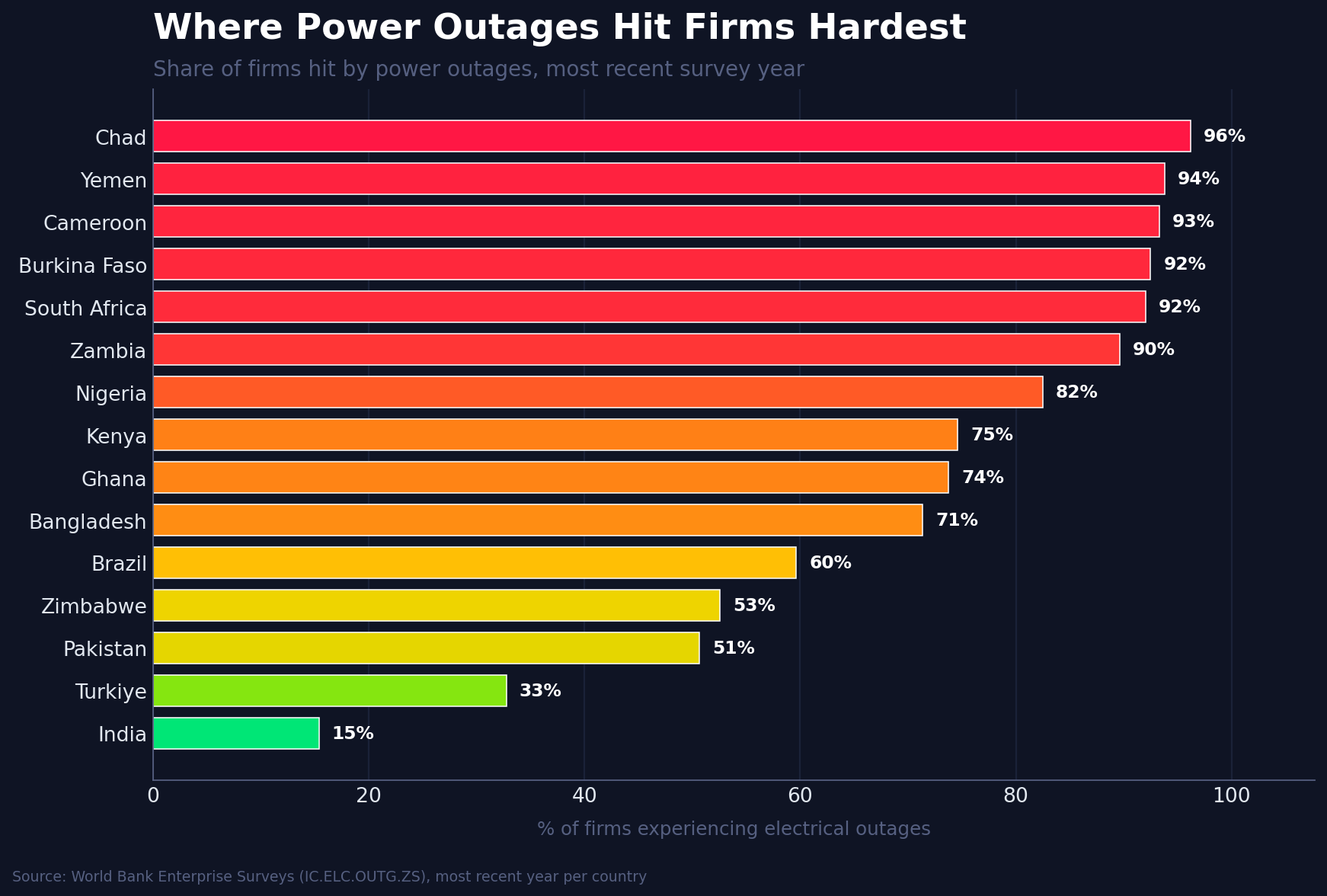
1. Structural load shedding (chronic). The grid can’t generate or deliver enough power to meet demand, so utilities deliberately cut power on a rotating schedule. This is daily life in South Africa, Nigeria, Pakistan, parts of India, and has hit Lebanon and Iraq in severe crises. Outages are predictable but constant—you plan your day around the schedule.
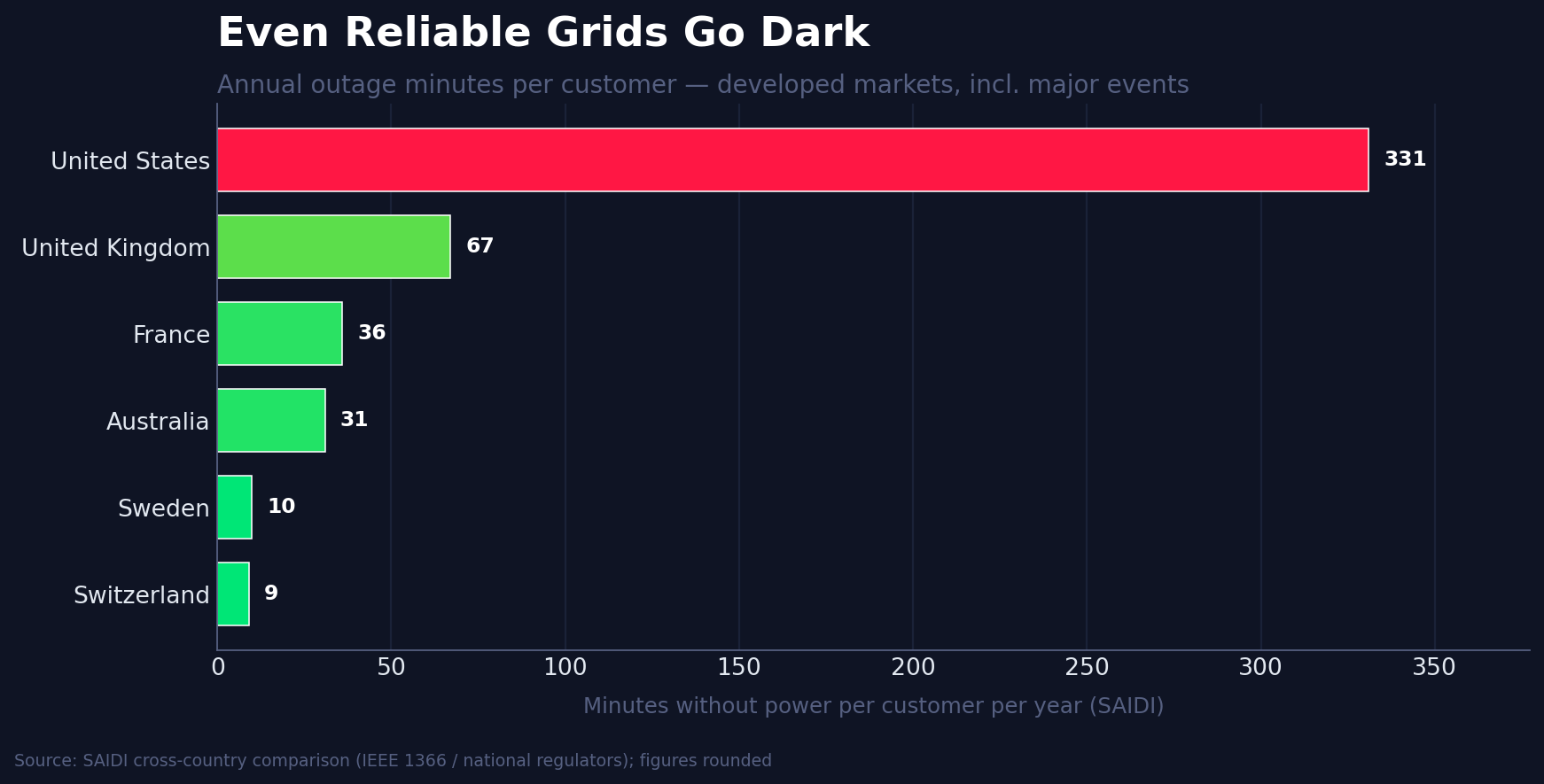
2. Event-driven outages (acute). The grid is generally reliable, but a specific event—an extreme storm, wildfire risk, equipment failure, or heatwave—knocks out power for hours or days. Think U.S. hurricanes and winter storms, California’s PSPS fire-prevention shutoffs, UK and Australian storm outages. These are rare but severe—you prepare a kit and backup power and hope not to need them.
Understanding which type affects you changes everything: how often you’ll lose power, for how long, and what kind of backup gear actually makes sense. Our country guides are organized around this split.
Where Outages Hit Hardest
A quick world tour—each of these has a full guide linked below:
- Southern Africa (South Africa): The world’s most famous load shedding, with scheduled outages that have reshaped daily life and the economy for years. Full guide →
- West Africa (Nigeria): Chronic grid instability means many households and businesses rely on generators as a matter of course. Full guide →
- South Asia (Pakistan, India): Routine load shedding during peak demand, worsened by heatwaves and fuel shortages. Full guide →
- United States (hurricanes, winter storms, PSPS): A generally reliable grid hit by some of the world’s most damaging event-driven outages. See our hurricane, winter storm, and PSPS guides.
- Europe & Australia (storms, wildfires): Normally stable grids exposed to increasingly severe weather-driven disruptions. See our UK storm and Australia guides.
How to Start Preparing (Anywhere)
No matter where you live, preparation rests on the same four pillars:
- Know your risk — How often and how long do outages happen where you live? (See your country guide.)
- Build an emergency kit — Water, non-perishable food, flashlights, radio, first aid, cash for at least 72 hours.
- Sort out backup power — A portable power station (or generator, or solar combo) sized to keep your essentials running. This is where most people under-prepare, and where the right gear makes the biggest difference.
- Have a plan — What stays plugged in, what gets prioritized (fridge, medical devices, phones), and what your family does when the lights go out.
For the full step-by-step, see our complete power outage preparation checklist. To figure out what size power station you need, try our runtime calculator (coming soon).
What You’ll Find on LoadShedHub
This site is organized so you can quickly get to what matters for your situation:
- Country & scenario guides — Detailed, localized advice for South Africa, Nigeria, the U.S., the UK, Australia, and more. Start here.
- Gear reviews & comparisons — Honest, hands-on guidance on portable power stations, solar generators, and inverters from brands like EcoFlow, Jackery, BLUETTI, and Anker, so you spend money on what actually fits your needs.
- Tools — Our power-station runtime calculator tells you exactly how long a given unit will run your devices.
- How-to guides — Practical checklists and explainers that work in any country.
The Bottom Line
Power outages are a global, growing problem—but they’re a solvable one. A little knowledge and the right preparation turn a crisis into a minor inconvenience. Pick your country or scenario below, or jump straight to our gear guides if you know what you need.
Country & scenario guides: South Africa | Nigeria | Pakistan & India | U.S. hurricanes | U.S. winter storms | California PSPS | UK storms | Australia
Gear & tools: best portable power stations | brand comparison | solar generators | inverters for load shedding | runtime calculator | the complete checklist | generator vs power station | router & fiber UPS | power stations for camping
2 Comments
Comments are closed.